Taught by distinguished practitioners
Core NYU faculty support your development as a counselor throughout the program by applying real-world experiences and case examples in the online classroom and in-person clinical training. The counseling master’s program is led by faculty members who hold professional licenses and are recognized leaders in counseling education and practice.
As experienced practitioners and researchers, they bring clinical expertise in areas such as trauma counseling, LGBTQ+ counseling, stress management, strategic career planning, cognitive rehabilitation, bilingual education, cross-cultural diversity, and career and college readiness.
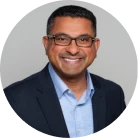
Anil Chacko
Professor Chacko’s research explores the development of effective interventions for children and adolescents with disruptive behavior disorders, with a focus on improving family engagement and expanding access to evidence-based mental healthcare.
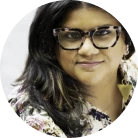
Frandelia Moore
Professor Moore’s clinical work has focused on assessing and processing clients’ trauma histories and helping them navigate complex institutional systems; her research interests include mixed-race identity, intersectionality in academia, and anti-oppressive supervision for BI+POC students in counseling programs.
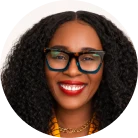
Sailume Walo-Roberts
Professor Walo-Robert’s research interests include trauma, refugee and immigrant mental health, gender-based violence, racialization and identity development, collective memory, communal storytelling, intergenerational healing, and multicultural and decolonizing approaches to counseling.
A curriculum that empowers you to empower others
The online master’s in Counseling for Mental Health and Wellness program prepares you to become a counselor who works with culturally diverse populations. You gain the clinical expertise, ethical judgment, and self-awareness needed to support all individuals, families, and communities.
Social justice isn’t a specialization or elective track in this program – it’s a foundational lens for understanding mental health, human development, counseling relationships, and professional responsibility. The curriculum prepares you to recognize how culture, identity, and systems shape lived experience, and to bring that understanding into your work with individuals and communities.
Through coursework and experiential learning, you learn to:
- Help clients of all ages and backgrounds craft lives of health, wellness, and meaning
- Apply critical counseling skills, including case conceptualization, practice, and advocacy
- Conduct assessments and interventions with children, adolescents, and adults
The master’s in mental health counseling allows you to tailor your program by choosing from a variety of elective courses on topics such as cognitive behavioral therapy, substance-related disorders, marriage and family counseling, adolescent sexual decision-making, responses to trauma, and immigrant-origin youth.
Sample elective courses include:
- Social Justice Practice for Counselors
- Trauma: Theoretical and Clinical Perspectives
- Substance Related and Addictive Disorders
- Cognitive Behavior Therapy
Before starting clinical practice, you complete signature learning experiences designed to strengthen your reflective practice and cultural awareness. The semester-long Behavior Change Project encourages you to examine your own behavior change process, while a self-assessment using the Pamela Hays ADDRESSING Framework helps you explore the perspectives and beliefs shaping your understanding of yourself and others. Through the Cultural Immersion Project, you further develop cultural humility by examining how identity, community, and lived experience influence the counseling relationship. Together, these experiences help you acquire the self-awareness and empathy needed to become an ethical mental health counselor.
As a Counseling for Mental Health and Wellness student, you can choose to participate in Ghana: Cross-Cultural Perspectives in Mental Health & Wellbeing, an optional study abroad course that combines online coursework with a one-week immersive experience in Accra, Ghana. Through field experiences with local educators and mental health professionals, you deepen your understanding of cultural humility, community well-being, and cross-cultural counseling in a global context. Additional study abroad opportunities, including programs in the Dominican Republic and Italy, further expand options for multicultural engagement.
During the final term of the program, you take the Counselor Education Comprehensive Examination (CECE). The CECE serves as the program’s terminal academic experience and assesses your knowledge of core counseling concepts before graduation.
Select your track
Choose the enrollment pace that best aligns with your goals and schedule. The program offers a full-time track and a part-time track, with term and credit breakdowns shown below. Please note that both tracks include Summer terms.
| Full-time track (Fall/Spring start): | Finish in five terms | 12 credits each |
| Part-time track (Fall/Spring start): | Finish in ten terms | 6 credits each |
Extensive field training
Clinical preparation is integrated throughout the program, allowing you to build confidence before working directly with clients. You begin in the counseling lab, practicing counseling skills through simulated scenarios before progressing to supervised clinical work in community settings.
You receive the real-world training and field preparation to succeed as a mental health counselor through the following experiences:
| Field experience | Term (five-term track) | Location | Time commitment |
|---|---|---|---|
| On-campus immersion | Summer, year one | NYU | 3–4-day immersion |
| Counseling lab | Term one | Online | Scheduled alongside coursework |
| Practicum | Term three | Local placement | 8–10 hours per week; 100 hours total |
| Internship I | Term four | Local placement | Minimum 19 hours per week (3 days); 300 hours total |
| Internship II | Term five | Local placement | Minimum 19 hours per week (3 days); 300 hours total |
Term (five-term track)
Summer, year one
Location
Local
NYU
Time commitment
3–4-day immersion
Term (five-term track)
Term one
Location
Local
Online
Time commitment
Scheduled alongside coursework
Term (five-term track)
Term three
Location
Local
Local placement
Time commitment
8–10 hours per week; 100 hours total
Term (five-term track)
Term four
Location
Local
Local placement
Time commitment
Minimum 19 hours per week (3 days); 300 hours total
Term (five-term track)
Term five
Location
Local
Local placement
Time commitment
Minimum 19 hours per week (3 days); 300 hours total
You will work with a dedicated placement team to identify and secure an appropriate field placement within a 75-mile radius of your preferred address. Our program welcomes your insight and suggestions so that placements are relevant and appropriate to your interests and the needs of your community.
Accreditation and licensure preparation
Accreditation
The Master of Arts in Counseling for Mental Health and Wellness is accredited by the Master’s in Psychology and Counseling Accreditation Council (MPCAC). The curriculum aligns with accredited standards and rigorous expectations, combining academic preparation with supervised field experiences that prepare students for counseling practice.
New York University is accredited by the Middle States Commission on Higher Education (MSCHE).
Licensure
The program equips you with the skills and field training to pursue licensure as a mental health counselor in your community. Because licensure requirements vary by state, you should carefully review the regulations in the state where you intend to practice.
You may be eligible for licensure in states outside New York. However, some states require graduation from CACREP-accredited programs or impose additional requirements. We strongly encourage you to research your state’s licensing regulations before enrolling.
Start collaborating with experienced faculty
Take the next step toward becoming a mental health counselor
Discover how NYU’s MA in Counseling for Mental Health and Wellness can help you build the clinical skills and experience needed to support individuals, families, and communities. Join the dedicated, compassionate community that defines NYU Steinhardt and learn more about our online counseling master’s program.